12 for 2016

blindspot16

I’ve decided to participate in a year long event, the Blind Spot Series, where I watch one film a month and write a short post about it. The idea is to view classic films that are a “blind spot,” films I have yet to see.

Here’s the list of films I intend to watch and blog about.

Of course, this list is by no means exhaustive of all the films I hope to experience in the coming year, but I have to start with a plan. I reserve the right to revise the list, but this is a good and varied starting point.


Favorites from the Criterion Blogathon

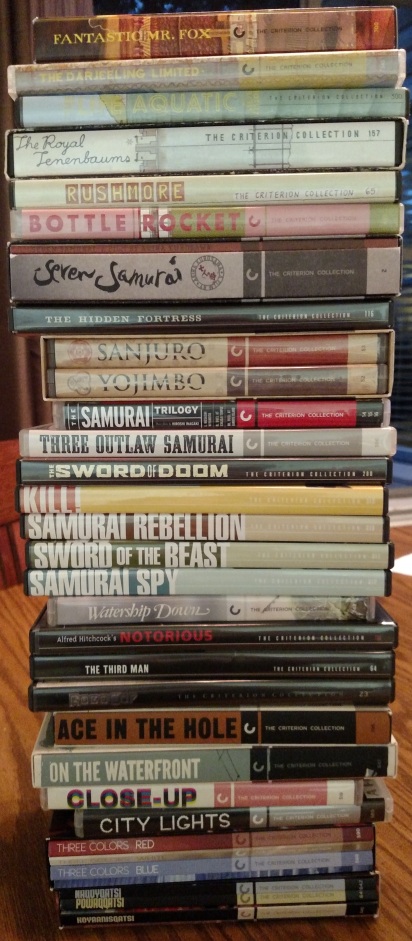
My Criterion Collection

Fig. 1: My Criterion Collection

My previous post, regarding Hitchcock’s Notorious, was my official entry into the #CriterionBlogathon. This has been a very fun event for me personally, and it has been gratifying to have interactions with new readers from literally all over the world.

I thought it would be fun to talk a little about what the Criterion Collection means to film lovers like me, and share a few of my favorite posts from the Blogathon. The full list of posts is found HERE.

Continue reading

A Perfect Film: Alfred Hitchcock’s NOTORIOUS

Drink to me only with thine eyes,
         And I will pledge with mine;
Or leave a kiss but in the cup,
         And I’ll not look for wine.

NOTE: This post is part of the Criterion Blogathon! To see posts from others in the Blogathon, check HERE.
Criterion Banner FINAL
Notorious

Notorious

Alfred Hitchcock’s Notorious is not only one of my favorite films, but I can say without hyperbole that it is one of the most perfect films ever created.

Continue reading

Heeeeeeere’s Jeffrey!

Looking-Closer3sm

“And there was much rejoicing.”

Jeffrey Overstreet, author of the insightful, humble, and compassionate book on film called Through a Screen Darkly, has relaunched his blog on his own new website, LookingCloser.org!

I have been following him for a few years now, and I want to highly recommend that you do the same if you have any interest in film, music, or cultural criticism. Like my other favorite film reviewer, Steven Greydanus of DecentFilms.com, he is a critic who approaches the art of film from a Christian perspective, but he is not a “Christian film critic.” If you don’t understand the difference, then you simply MUST read Jeffrey’s book. If you do understand the difference, then you also MUST read his book, for you will find sympathy, wisdom, and grace within.

Anyways, check out Jeffrey’s new site. I can heartily recommend it despite his ill-advised decision to allow me to contribute to one of his opening posts on the new site. If you want to read my recommendation for viewing the film Ace in the Hole, along with some other, more erudite contributions, check it out HERE.

And check back regularly, Jeffrey updates his site frequently like a real blogger should.

My Top 3 Posts about Awards and Lists, Part 2

Bugs list

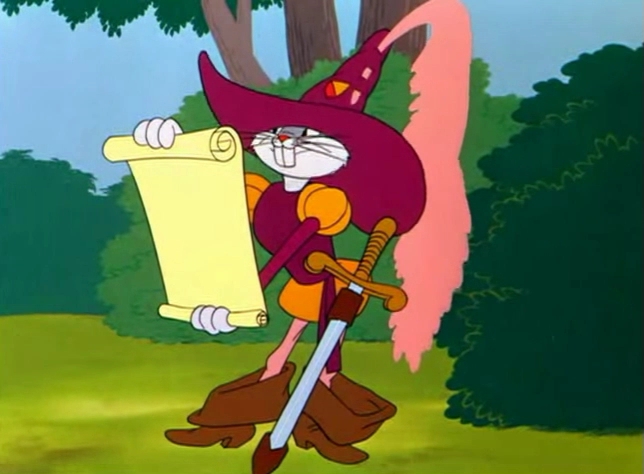
Doctor Zhivago? What’s UP, indeed, Doc?

Having addressed the issue of Awards in Part 1 of this series, I will now proceed in true Hollywood fashion to present you with a sequel which no one asked for.

Related to the notion of awards is that of lists. As I discussed before, narrowing the criteria, especially chronologically, for honoring films, can lead to problems. For example, some years there just aren’t any films that really deserve the type of recognition that suggests that they stand in the pantheon of other exemplars of cinema. And so, the list is born.

Lists of course have their own set of problems. Really, all lists are bad in some way. If they are composed by surveying a group of respondents, even experts, then they are necessarily compromises. They are an average of some sort, which can lead to some aberrations. They will also lack the personality of an individual’s list, the sense that the list is curated by someone who cares about the subject. So let’s look at the difficulties with the alternative to a committee-created list.

I told you, I am not a committee!

Individual lists can be filled with obscure or idiosyncratic choices, which can be either positive or negative. In some cases, such as this most-likely-Troll-listing claiming to be the *cough* DEFINITIVE ranking of Disney films, they are an offense to the sensibilities of all people of good will.

Recognizing the inherent limitations of the project of listing, does not mean that I consider it pointless. I owe a lot to the guidance and suggestions provided by some lists, and to the compilations found in such books as Roger Ebert’s “The Great Movies,” which are a type of list. Lists are good at compiling and documenting the critical consensus within a particular community. Lists can be a great guide to someone looking to broaden their experience with film. And even when, inevitably, you disagree with the rankings or inclusions on a list, they are a great conversation starter. It’s important to not grant a “definitive” status to any list, nor to treat any “ranking” as the total measure of relative artistic worth. Just as a baseball player can’t be appreciated merely by a list of his statistics, a film cannot be appreciated by looking at its placement in a list. Lists are the beginning of an argument, not the conclusion of one.

More like 83 Years…100 Movies, but who’s counting?

The first list of importance to me personally was the American Film Institute’s “AFI’s 100 years…100 Movies” list, which arrived in 1998. I came across it in a magazine, which I probably still have somewhere. I thought that I would count how many of them I had seen, ant it was likely around thirty-something. And then I embarked on a project to watch them all. It took me about 10 years to do it. Remember, this was pre-Netflix, and many of the films on the list were not even readily accessible on home video format. So I saw most of them by borrowing from the local library, and through rentals at Blockbuster (RIP) or Hollywood Video (RIP).

I found that as I watched the movies, I didn’t see the appeal of many of them, but I did greatly expand my horizons. I watched many films I otherwise would perhaps never have seen, and some which have become favorites, like Network, Yankee Doodle Dandy, and Duck Soup. I was given a context from which to appreciate other films, and an education in what was considered by “more than 1,500 leaders from across the American film community” to be the greatest films our nation has produced.

Just as I was completing my journey through the original, AFI released a 10 year anniversary update of the list. I felt that this list was markedly superior, and had some key changes that I thought were significant. Viewing some of the films on the original list, such as Pulp Fiction, and possibly Fargo was what led me to formulate the idea that lists of this type should in principle exclude films of too recent vintage. Those films, while arguably made with considerable skill, seemed too fresh to really evaluate in the context of a century’s achievements. The second version was not immune from this temptation, and perhaps upped the ante by including 4 films that were made in the years since 1998, the year of the first list. On the other hand, Fargo, (present on the original list, but absent in the sequel) was released only 2 years before the list’s publication, while the second list’s most recent release was from 2001, when six years had passed.

THE SEARCHERS at #96? That’ll be the day.

Again, I resonated much more closely with the second list. The additions of Buster Keaton’s The General, Robert Altman’s Nashville, and Ridley Scott’s Blade Runner are to me, unquestionable improvements over Giant, Dances With Wolves, and Wuthering Heights. In the rankings, too, there are some significant reassessments. City Lights, Chaplin’s most moving silent film, jumped up 65 ranks, for example, while John Ford’s complex masterpiece The Searchers, jumped an astonishing 84 spots. These are welcome changes in my view, as is the demotion of Ben-Hur.

All this talk of awards and lists was brought to mind by another recent list on the same topic which was released by the BBC a few weeks ago. That list, along with some other interesting lists for discussion will be the topic of post 3 in this series, coming soon to a blog near you.


Criterion Blogathon

Well, I’m going to be participating in the Criterion Blogathon, hosted by Criterion Blues.

Criterion Banner FINAL

Not a bad choice…it was Col. Potter’s favorite film after all!

What will I write about? Will I choose one of Wes Anderson’s films, or Orson Welles’s? Or something altogether unexpected?

Come back in November to find out! And hopefully some time before then too.

You Know What I Did This Summer

This blog post will be lost in time like….

Here’s a list (I think complete) of all the movies I saw this summer (since May, which counts as Summer in Houston). Movies with an * were first time viewings.

Close-Up*

Hot Fuzz*

The Lady From Shanghai*

Sansho the Bailiff*

The Kid With a Bike*

Harold and Maude*

Bicycle Thieves*

The 400 Blows*

Tokyo Story*

Diary of a Country Priest*

The Ruling Class*

L’Avventura*

Breathless*

Stagecoach

Rome, Open City*

A Prairie Home Companion*

The Avengers: Age of Ultron*

Taste of Cherry*

Hiroshima Mon Amour*

The Rules of the Game*

Rio Bravo*

Shadow of a Doubt*

Gremlins

Red River*

Love and Mercy*

Black Narcissus*

Sullivan’s Travels

The World’s End*

The Leopard*

Atari: Game Over

The Stranger*

St. Vincent*

Dead Again*

La Dolce Vita*

Hitchcock*

She Wore a Yellow Ribbon

A Separation*

The Player*

Grand Illusion*

RoboCop

Children of Paradise*

Jurassic Park

8 1/2*

Ninotchka*

The Purple Rose of Cairo*

Ant-Man*

Frances Ha*

Kicking and Screaming*

Gremlins 2: The New Batch

The Black Stallion*

Barry Lyndon*

Watership Down

Three Outlaw Samurai*

Song of the Sea*

Two Days, One Night*

Shaun of the Dead*

The LEGO Movie

Blade Runner

Best in Show

King Kong

I may have missed a few, but I can’t remember any more. All in all a pretty varied and interesting set of movies, with many I had never seen before. Do you see any of your favorites on the list?

My Top Three Posts about Awards and Lists, Part 1

The award goes to…

How many times have you watched the Oscars and thought….”that movie??” Despite the disdain that many of us now hold for the gaudy spectacle of the Academy Awards, there is no denying its perennial appeal to the masses, much like the appeal of the auto wrecks along the daily commute. You can’t help but pay attention to them, if for no other reason than that everyone else is stopping to stare.

And yet, it seems that there should be some means for recognizing great achievements in film on a regular basis. I suppose some people are opposed in principle to the idea of rewarding or judging works of art, but I think most of us are just disappointed in the way that it is done currently. The Academy Awards, as everyone knows, are much like American politics; that is to say, they are a popularity contest swayed by the money and influence of powerful individuals and corporations. I don’t think it’s cynical to point that out, and certainly that doesn’t mean that there aren’t some very worthy films nominated and awarded each year. But I think that as the years go on, the track record for picking the “Best” picture of the year seems to be getting more and more shaky.

An important problem with the current system is that there is a lack of sufficient critical distance. Surely many of the movies that came out last year were great, but are we sure which ones just yet? We really need time to let these works of art seep into the consciousness of our critical faculties, to get some perspective on where they stand in relation to the other films that year. We need time to allow the overhyped but ultimately shallow film fade, and to let the hidden gem be found, unearthed, and polished so that its beauty can be fully appreciated.

So how could this be made to work better? Of course this would never happen, but I think there should be an award for the Best Picture of 10 Years Ago. A decade is just starting to be enough time to let that critical appreciation develop, and not be a tidal wave of popular sentiment. These films are not usually still making a lot of money for the studios, so the financial motives for campaigning for a film will not be as influential on something that is supposed to be awarded for technical and artistic merit. Additionally, the timing of the film’s release would not any longer be a factor. It is of course irrelevant to a picture’s worthiness whether it was released too early in the year to be remembered, or too late to build enough buzz, but that is supposedly how these things work. Evaluating a movie 10 years later would eliminate this consideration completely.

Of course, if we were to really have a new type of retrospective award, attempting to make a purer and more merit-based system, it begs the question to define what the award would be for. In one sense, there can’t really be a “best picture” of the year. How can I truly compare the relative virtues of 2005’s Batman Begins and Munich? Both films are excellently crafted and I love them both, but they set out to accomplish very different things artistically.

This however leads me to consider that ranking or awarding films within a particular year is a pretty arbitrary criterion anyways. There are solutions to that, such as expanding the award to a longer time period, (maybe no films deserve a big award in any given year…) or awarding by genre, etc. This may open more problems than it is capable of solving, though. It seems intuitive that silent films of the 1920s should not be judged against films of the 21st century…or should they? But the broader you make your parameters, whether chronological or otherwise, you begin to leave the realm of awards and approaching the realm of listmaking. Lists such as “The Best Foreign-funded American Movies of 1969-1987,” or “The Top 50 Romantic Nature Documentaries of All Time.” And that, friends, is the subject of Part 2 of this discussion, coming soon to a blog near you.

In the meantime, comment below: what do you think of awards? How could they better reflect the desire to appreciate excellence in film art and entertainment?

Movies about Movies

Technically, this is just one painting.

Watching the 2012 film Hitchcock, about Alfred Hitchcock and the making of Psycho, has given me another chance to reflect on movies that are about making movies. Perhaps no other artistic medium has made the medium itself the subject more than the cinema. Many such films, are overt and direct in their depiction of the subject, while others are more metaphorical in their treatment. The film Hitchcock, a serviceable if by the numbers entertainment, is technically a biopic, but of course, when the subject is a film director, the subject is also film.

I think that this situation may be the case for two reasons, primarily. The first reason has to do with practicality, and the second with imagination.

First, films have a unique capability for showing us the technical means of the medium. It is not easy to “show” a book being written in the same way as you can show a film being made. Nor would it likely be interesting. The proliferation of “Behind the Scenes” and “Making of” documentaries on DVDs speaks to the perrennial interest in the technical means of making a movie. Because you can easily take a camera and point it at the other cameras, (or the editing room, or the writer’s room, etc.) making film the subject is a relatively easy process. And that a film progresses through time, rather than being static like a painting, allows for the depiction of the technical means to become a narrative. But that doesn’t entirely explain the prevalence of such films in commercial and art cinema. I think there is additionally a convergence with the modern era’s fascination with technology and technical progress that makes these films so attractive. The cinema is the first narrative art medium that arises from what we consider modern technology. And that is inherently interesting to the modern mind in a way that a brush or pen is not, apparently.

The second source of appeal is the often cited association of the medium of films with the notion of Dreams and Imagination. Our dreams contain the fantastic, and films (through the application of increasingly sophisticated technical means) can allow us to see anything we can dream up, but while awake. This observation is so commonplace, that it should not be surprising that movies about movies often involve a substantial amount of dream-imagery. Even in Hitchcock, one of the conceits was that the master director had a series of imaginitive conversations with the real-life killer upon which the character of Norman Bates in Psycho was based.

Even cartoons have gotten into the act pretty frequently. Besides such live action/animated hybrids such as the Fleischer “Out of the Inkwell” series, where the creator and his drawn creation interact, there were many shorts created that supposedly depict the process of making cartoons. Of course these depictions are rarely more than fantasias of strung-together gags, but they still instance the self-referential theme that seems to cross all genres of film.

https://youtu.be/2dVnF_wjh4E

Not all films in this category are just about making movies. Some are also about watching movies, and the way in which movies influence us and interact with our lives. So many major and minor film directors have made movies in this category, that a comprehensive list would be probably impossible. Here are ten that I have seen, for starters, with a brief comment about each:

  1. Sunset Boulevard (1950), Billy Wilder. The transition of film from the Silent era to the era of Talkies was as painful as the transition of childhood through adolescence. This black comedy/film noir includes legendary actors and directors, some playing themeselves, and others playing fictionalized versions of themselves. Buster Keaton has a small role, and Erich von Stroheim portrays a butler who is actually a failed film director. One scene involves a visit to the set of a Cecil B. DeMille epic film.
  2. Hugo (2011), Martin Scorsese. Nominally an adaptation of a (amazing) children’s novel/graphic novel, The Invention of Hugo Cabret, it is a love letter not only to the pioneering cinema of Georges Méliès, but to the whole medium of film, particularly in the way that technical innovation intersects with the imaginative capabilities of the movies.
  3. Sherlock, Jr. (1924), Buster Keaton. Here again dreams and film interact. Buster Keaton portrays a film projectionist who lives out a fantasy of being a detective as his dream-self enters the film he is showing.
  4. Who Framed Roger Rabbit (1988), Zemeckis. The idea that Cartoons live in the Real World is as old as Cartoons themselves, but here the fact that they are also drawings is given a playful ambiguity in the script. We are again taken behind the scenes on a film set, but this time is the filming of a cartoon, if cartons were actually made on a sound stage like live action films.
  5. Sullvan’s Travels (1941), Sturges.  Joel McCrea plays a wealthy filmmaker who wants to make a socially important film about poverty, but along the way discovers that comedy and laughter are important as well. This is an example of an examination of the effects of film-watching on us, from the perspective of a filmmaker protagonist. But as Steven Greydanus points out in his review, this is “too complex and interesting a film to be reduced to its ostensible message.”
  6. The Artist (2011), Hazanavicius. The 2012 Best Picture Oscar winner is a silent movie about (again) the end of the silent era.
  7. Ed Wood (1994), Burton. The life and times of the man who made one of the worst films of all time, the deliciously terrible Plan 9 From Outer Space. (Watch it before you see Ed Wood for maximum impact. You won’t regret it.)
  8. The Life Aquatic with Steve Zissou (2004), Wes Anderson. Steve Zissou is ostensibly a documentary film maker. We are given several glimpses of his technical filmmaking apparatus throughout the film. As I have argued, the whole film is an exploration of the way in which film and reality interact. Besides the fictional character’s documentary filmmaking, we are also treated to the extraordinary scene where we see the set of the movie itself, the cutaway boat scene
  9. Close-up (1990), Kiarastomi. See here for my thoughts on this film as well as Orson Welles’s F for Fake.
  10. The Muppet Movie (1979), Frawley. Although I think of the song “Hey a Movie!” in relation to this theme, it isn’t in this film, but the sequel. Nevertheless, the first movie’s entire plot revolves around the Muppets trying to get to Hollywood and make a movie about themselves. Perhaps unsurprisingly, my favorite movie in-gag is the moment when Orson Welles appears as the studio exec to sign the Muppets to a “standard ‘Rich and Famous’ contract.”
Who says Welles only got that one Oscar?

Other films about films that I have not seen, but hope to include The Player (Altman), 8 1/2 (Fellini), Day for Night (Truffaut), and Clouds of Sils Maria (Assayas).

In the comments, please share any movies that you think I should not overlook in this category!

What kind of movie is this, anyways?

Some films try to straddle the line between different genres, or blend the different emotional tones that are characteristic of these genres. In some cases, this effort has become a formula, and it become its own established genre, such as the “Romantic Comedy.” In many cases, this can lead to novel and moving films, but perhaps more often it seems that the efforts to move in one direction cancel out the efforts in another. Rather than allowing a filmmaker to achieve a harmonious counterpoint, there is often an unsuccessful result that causes the audience to ask, “what kind of movie was this supposed to be?” Not just anything can be tossed in a blender and come out appealing.

Did someone say, “Blender?”

I recently rewatched Joe Dante’s 80’s Horror-Comedy film, Gremlins. I hadn’t seen it in perhaps decades, and I wanted to watch it with my teenage daughter. I found it held up as a very satisfying mix of spooks and laughs. I was a kid when this movie first arrived in theaters, and I did not see it at that time. I do recall friends telling me about the splatterfest kitchen scene, though, which indicated to my imagination that Gremlins was a pretty serious horror film. Viewed from my vantage point today, I see it much more as just a broad comedy with a few jumps and gross-out moments. Tellingly, perhaps, however, my daughter asked me if it was supposed to be funny (though all the while she was laughing at the absurd hijinks of the monsters on screen). Viewers unexperienced with this sort of mix might not be sure that they are getting the joke, but I think for a seasoned moviegoer, it is pretty clear, and pretty funny.

Don’t you know who I am, Billy?

Of course, to those in the know, Dante telegraphed his intentions partly through a fairly gratuitous cameo by the great animation director Chuck Jones in the early scene in the bar. This cameo is a lot like the cameos of Stan Lee in all the current Marvel Comics movies. Dante is paying homage to the influential creator whose work is an inspiration to the film we are watching. It may seem strange to think that Jones, who is associated with the Roadrunner, Pepe le Pew, and many of the most famous Bugs and Daffy cartoons, might be the inspiration for a comedy in horror film trappings, but a closer look at his work might give some more clues to Dante’s sources of inspiration. In cartoons such as Hair-Raising Hare, Scaredy Cat, and its remake, Claws for Alarm, Jones mines a great deal of humor from the horror-genre settings of a haunted house and the castle of a mad scientist. Gremlins is effectively a live action cartoon in this tradition, filled with the sort of implausible action and laughable villains that might populate a Looney Tunes short.

Attercop, attercop!

Perhaps the most extreme way that a filmmaker might attempt to mix moods is by making a genre film that parodies the conventions in the genre, while simultaneously trying to be an exemplar of that very genre. This rarely works, as the filmmaker is basically trying to have his cake and eat it too. An example which I think does pull it off is Edgar Wright’s Hot Fuzz.

Police work, like comedy, is serious business.

Every convention of the Buddy Cop film is skewered and exaggerated for comic effect, but at the same time, Hot Fuzz is a great action cop film. When Simon Pegg and Nick Frost’s characters have a movie marathon, dipping into an enormous video library of buddy cop movies, the audience is getting a knowing wink from the director that functions much like Chuck Jones’s cameo in Gremlins. By calling out the source material for the film, Wright is implicitly inviting comparison. In a parody, referencing the source material is an almost indispensable device for establishing the context of the humor, but in a straightforward genre movie an homage can backfire merely by reminding you of a much better film. So while it takes a degree of confidence to pull off any genre mixing, it takes even more skill to succeed in lampooning the very type of film you are celebrating. The type of self-aware storytelling that this involves can be condescending to the audience or induce them to start rolling their eyes. The frequent result is a jumble of emotional beats that undermines credibility and sincerity. However, in their playful mix of genre conventions, Hot Fuzz and Gremlins both trip along confidently, where other films might just trip and fall.